What Are the Most Popular Routes After Renting a Bike in San Francisco?
July 13, 2026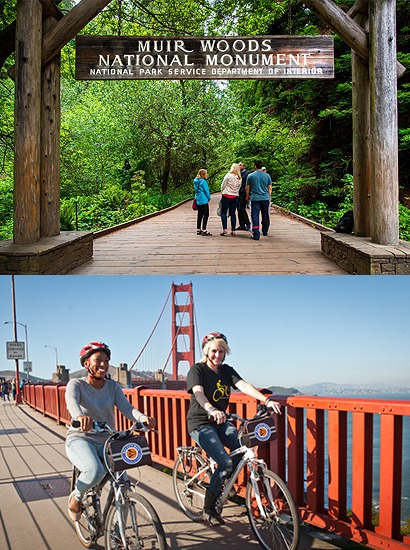
If you rent a bike in San Francisco and only have time for one classic outing, take the scenic waterfront route from the Ferry Building past Fisherman’s Wharf to Crissy Field, then continue toward the Golden Gate Bridge if you’re feeling adventurous (or sufficiently caffeinated). This route remains a favorite for a simple reason: it’s beautiful, relatively flat, and forgiving for visitors who are still getting acquainted with the city’s unique terrain.
Many people arrive expecting San Francisco to be an easygoing beach-cruiser destination. Then they turn inland, encounter their first serious hill, and quickly realize the city offers much more of a workout than expected. The good news is that you can still enjoy an unforgettable ride without tackling the steepest climbs or navigating stressful traffic conditions. The key is choosing a route that matches your fitness level, riding experience, and comfort in urban environments while staying flexible enough to adapt to the city’s ever-changing weather.
What routes fit most first-time renters?
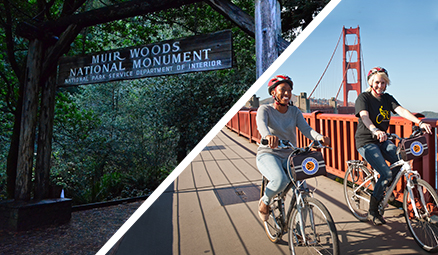
First-time renters tend to have the same three goals, even if they don’t say them out loud: see iconic landmarks, stay near the water (which usually means flatter riding), and avoid the kinds of intersections that make them question their route choices. That usually points riders toward the Embarcadero-to-Presidio corridor, Golden Gate Park via The Wiggle, or a ride to the Golden Gate Bridge and back if they’re comfortable sharing space with wind, cyclists, and fellow visitors.
Here’s the most practical way to choose a route, especially if you’re traveling with family, working around a tight schedule, or trying to fit a ride in before evening plans in North Beach.
| Time You’ve Got | Fitness/Comfort Level | Recommended Route | Why It Works |
| 60–90 minutes | Casual | Waterfront to Crissy Field and back | Flat, scenic, and easy to adjust if plans change |
| 2–4 hours | Moderate | Golden Gate Bridge round-trip ride | Iconic views with mostly bike-friendly approaches |
| Half day | Strong legs or e-bike | Golden Gate Bridge plus Presidio exploration | Great scenery, varied terrain, and a deeper look at the city |
| 1–2 hours | Casual to Moderate | Golden Gate Park loop via The Wiggle | Park roads, fewer vehicles, and plenty of landmarks |
Best Start Points Near Rentals and Transit
If you want the smoothest experience, begin where the city naturally directs riders onto more comfortable bikeways.
- Near the Ferry Building for an easy Embarcadero ride and quick access to the waterfront.
- Fisherman’s Wharf or Aquatic Park if your goal is to reach the Golden Gate Bridge efficiently.
- Market Street if you want to use The Wiggle as a convenient connection to the Panhandle and Golden Gate Park.
- The Presidio and Marina area if you prefer to bypass some of the busiest tourist zones and reach open space more quickly.
Before heading out, it’s worth taking a quick look at a local bike network map. San Francisco has an extensive cycling network, but understanding how key routes connect can make your ride smoother, safer, and more enjoyable.
What “visitor-friendly” means in San Francisco
Visitor-friendly here usually means separation, predictability, and flatter grades. It does not mean “no cars ever,” because this is still a living city with buses, delivery vans, and drivers who occasionally behave like they’re late for something invented.
A visitor-friendly bike route in this town leans on protected lanes, multi-use paths, slow streets, and park roads. It also has obvious landmarks so you’re not fumbling with your phone at an intersection in the wind. That last part matters more than people admit.
Ride the waterfront to the Presidio
This is the route I put in the “can’t really mess it up” category, which is why it’s so popular with rentals, solo riding, and families. You get the Bay, Alcatraz views, sea air, and a steady stream of other riders to follow if you’re feeling unsure.
Ferry Building to Fisherman’s Wharf
Start by the Ferry Building and just… keep the water on your left. The Embarcadero is basically a runway for sightseeing on wheels. You’ll pass piers, palm trees, and the kind of views that make you text people you don’t even like.
Crowds are the main hazard here, not terrain. Weekends get thick with pedestrians who drift into the bike path, so treat your speed like a social contract. Rings and bells exist for a reason.
Aquatic Park to Fort Mason
Aquatic Park is where the ride starts feeling like a movie set. Curves, boats, the little amphitheater vibe, swimmers if you’re lucky or cold if you’re not. Keep your head up because the shared paths get narrow and people stop suddenly for photos.
Fort Mason is a natural pause point. It’s also where you start to feel the Presidio pulling you west, which is good because the road ahead gets even prettier.
Crissy Field to Presidio overlooks
Crissy Field is the emotional payoff: Golden Gate Bridge on the horizon, joggers, kites, and that bright slice of water that makes you forget you’re in a major city. If you want to stay on the most visitor-friendly lines, lean on the Presidio Trust’s mapped bikeways. Their Presidio bikeways map is refreshingly clear about where you can get off-street or at least away from the worst traffic patterns.
If you’re trying to roll all the way to the bridge without improvising, the Presidio’s Golden Gate Bridge route guide lays out a clean approach that avoids a lot of “wait, am I allowed to be here?” moments.
Cross the bridge to Sausalito
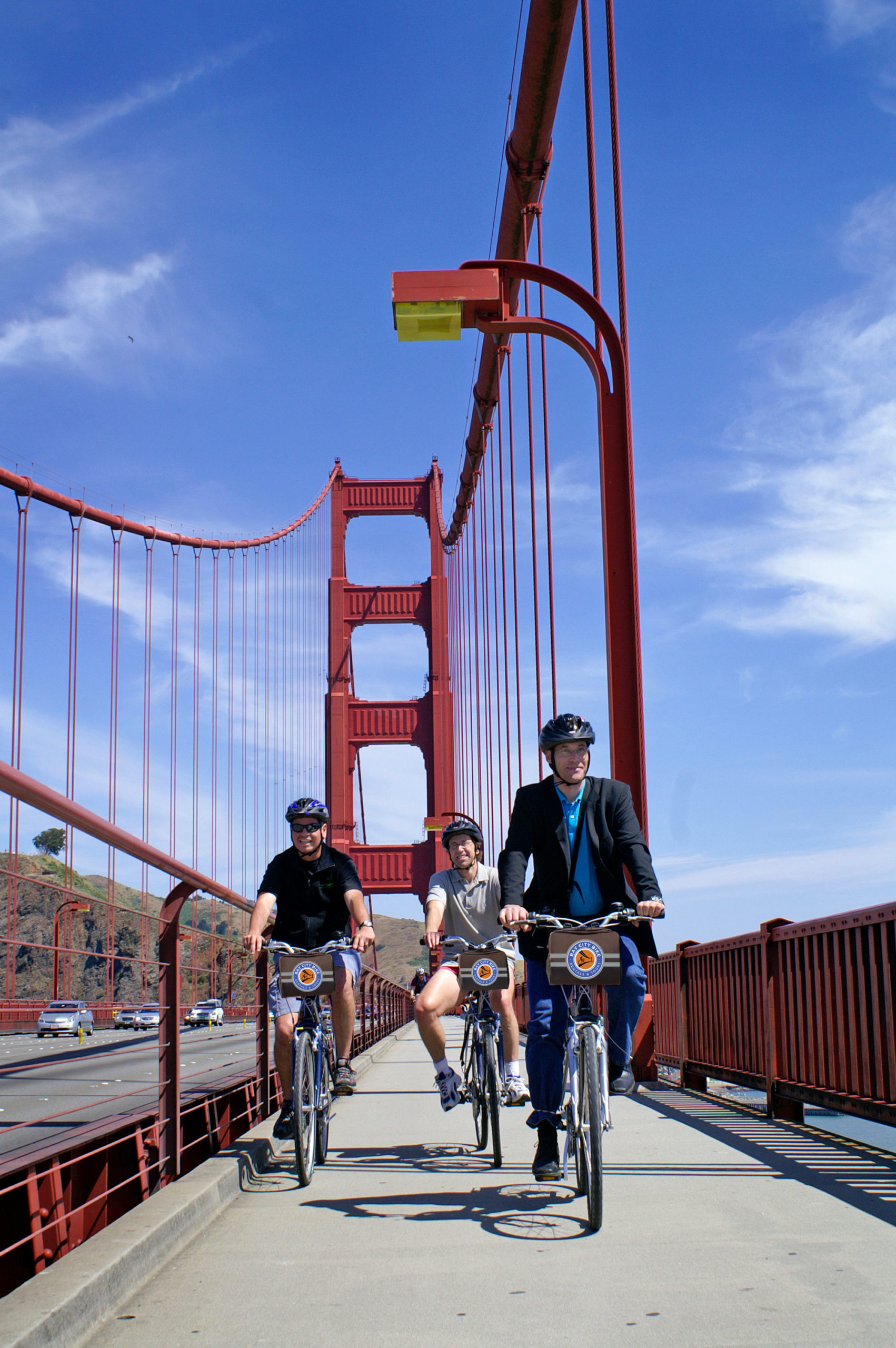
This is the bucket-list ride, and it earns the hype. Crossing the Golden Gate Bridge under your own power feels ridiculous in the best way. The mistake is treating it like a casual spin. The bridge is exposed, loud, windy, and full of people who have never navigated a shared path before.
Best approach from the city side
Most renters start around Fisherman’s Wharf or the Marina, then climb gradually toward the bridge. That approach keeps you near flatter streets and familiar landmarks, and it gives you a warm-up before the bridge’s wind tunnel effect.
If you’re the type who likes a little pre-game research, Jessie’s local notes on biking across the Golden Gate Bridge do a nice job capturing the “this is fun, but also pay attention” vibe.
Wind, fog, and bridge riding etiquette
Bridge etiquette is simple but people still ignore it, so I’ll say it plainly: hold your line, pass only when it’s safe, don’t stop in the middle for selfies, and expect sudden gusts that shove your front wheel sideways. If you’re on electric bikes, remember the acceleration makes wobbles worse, not better.
Also, the bike and pedestrian setup on the bridge can change. Before you roll out, check the Golden Gate Bridge bike and pedestrian path status and rules. That one link can save you a confusing reroute or an awkward interaction with staff on site.
Return options after the bridge ride
The bridge ride is usually treated as an out-and-back experience or a turnaround point before continuing along the San Francisco waterfront. The descent back toward the city is often easier physically but can feel more exposed due to wind patterns on the return.
If you’re planning a full ride back, build in time and energy reserves. Weekends can get busy, and delays or crowding can add unexpected downtime before you finish your route.
Add Presidio and Coastal Views for Big Scenery
If the Presidio is the warm-up, the higher ridgelines and coastal overlooks are the part where you prove something, mostly to yourself. The views are unreal. The climb is not subtle. The descent is fast enough that you should be honest about your handling skills.
Hawk Hill climb expectations
Hawk Hill is famous because it’s a clean, brutal little benchmark with a ridiculous payoff. On a standard rental, it’s a grind. On an e-bike, it’s still work, just less dramatic. Either way, bring water, pace it, and don’t zigzag across the road like you’re auditioning for a crash compilation.
People ask if it’s “worth it.” If you like panoramic San Francisco and Bay views and you don’t mind earning them, yes. If you’re already nervous in traffic or you’re riding with kids in tow, keep it as a “maybe next trip” and enjoy the flatter waterfront routes.
Safer descents and wind exposure
The descent is where things get spicy. Wind can slap you sideways. Fog can mute visibility. Hands get tired from braking. This is not the moment to discover your rental’s brakes feel squishy, so do a quick test ride near the shop before committing to anything steep.
Stay right, look through turns, and don’t overcook corners. Roads in these elevated areas can be narrow, and drivers are not expecting tourists to divebomb downhill like they’re in a road bike event.
Shortcuts for a shorter out-and-back
If you’re craving the elevated coastal vibe but not the full climb, do a partial out-and-back to a viewpoint, then return before the grade ramps up. You still get that “I rode across the bridge and into open scenic terrain” feeling, without turning the outing into an accidental endurance challenge.
 Loop Golden Gate Park without traffic stress
Golden Gate Park is where you go when you want green space and less negotiation with cars. It’s also sneaky-big. People underestimate it and end up with a longer ride than planned, which is kind of funny until you realize your legs are done and you still have to get back to your hotel.
Panhandle entry via The Wiggle
The cleanest way into Golden Gate Park from the east side is The Wiggle, the famous set of low-grade turns that threads through neighborhoods without punching you in the lungs. It’s a practical, low-effort connector that keeps the climb gradual and makes crossing town feel far more manageable.
Car-free corridors and slow streets
Inside the park, the best experience comes from choosing calmer internal roads and shared paths. If you want a sanity check on popular loops, the user-mapped options on Golden Gate Park road biking trails are helpful for distance and general flow.
Once you’re in, it’s easy to stitch together museums, meadows, and lakes without dealing with downtown traffic signals every 200 feet.
Ocean-side finish at windmills and beach
If you push to the western edge, the windmills and the beach give you that “edge of the continent” feeling. It’s windy. Always. Even when downtown is warm. That’s San Francisco microclimates doing their little magic trick.
A fun lock-up-and-walk detour is the San Francisco Botanical Garden if you want something calmer than another lap.
Use The Wiggle to cross town easily
The Wiggle deserves its own section because it solves a real problem: this city’s hills are not evenly distributed. They’re traps. The Wiggle is the workaround.
How the route avoids steep grades
Instead of charging straight west, The Wiggle snakes through a grid in a way that keeps grades mild. It’s not glamorous, but it’s the reason a lot of visitors end up thinking San Francisco is more bike-friendly than they feared.
Key turns and common navigation mistakes
The common mistake is missing a turn, then accidentally climbing something you did not consent to. If you’re navigating on your phone, use audio cues and pull over before you need to make a decision. The second common mistake is riding too fast in residential sections where cars pull out, doors open, and pedestrians step off curbs without looking.
Connectors to parks, waterfront, and downtown
Once you understand The Wiggle, you can link downtown hotels to Golden Gate Park, then decide if you want to swing north toward the Presidio and the waterfront. That connector logic is how locals chain together “errand rides” and longer scenic loops without turning everything into hill repeats.
What should you expect from SF terrain?
You should expect punchy elevation changes, even on short rides. You should also expect that “flat route” in San Francisco sometimes means “flat except for that one part.” That one part counts.
Hills to avoid and hills worth the effort
If you’re new or riding with family, avoid steep interior climbs like the ones that pop up in Pacific Heights. Save the effort for climbs that pay you back with a view, like the approach toward the bridge or designated scenic overlooks within the city.
Typical distances, times, and elevation
A classic waterfront out-and-back can be 8 to 12 miles depending on where you start and where you turn around. A bridge-focused ride can easily stretch into a longer half-day experience depending on your pace and route choices. Add steeper scenic climbs and you’ve signed up for real effort, the kind where your average speed drops and your legs start negotiating.
If you want to build routes like a local, platforms riders use for elevation profiles can help, but honestly, in San Francisco, your eyes and a good map do half the work.
E-bike vs pedal bike reality check
E-bikes make this city dramatically more accessible. They don’t make you invincible. They’re heavier at low speed, twitchy if you’re tense, and you still need to brake early on descents. If you haven’t ridden in a while, an electric bike can be the difference between “best day ever” and “why did we do this,” but only if you respect the extra speed.
How do weather and microclimates change rides?
San Francisco weather is a prank you learn to love. It can be sunny at the Ferry Building and raw at Ocean Beach in the same hour. Tourists think locals exaggerate. Locals are not exaggerating.
Fog, wind, and temperature swings
Fog rolls in fast, especially near the Golden Gate and the western edge of the city. Wind is a constant character on bridge and coastal segments. Bring one more layer than you think you need, especially if your route touches Crissy Field, the Presidio, or the beach.
Best times of day by season
Morning can be calmer for traffic, but foggier. Midday often clears a bit, but tourist density spikes around Fisherman’s Wharf and the bridge. In summer, don’t be shocked if the warmest part of your ride is nowhere near the water.
What to wear and pack on a rental
Light gloves help with wind and braking. A thin windbreaker matters more than a thick hoodie. Carry water, and if you’re going across the bridge, keep a small snack because bonking in the headlands is a uniquely miserable flavor of mistake.
How do you stay safe and follow road rules?
Most crashes I see visitors flirt with are the boring ones: door zones, unpredictable turns, riding two-abreast on narrow paths, stopping suddenly on a bridge approach, and trying to take photos while moving. Treat your ride like driving. Scan ahead, signal, and assume other people are distracted.
Keep your speed down on mixed-use paths. Yield where you’re supposed to yield. Use lights if it gets dim. Lock up properly if you stop. If you’re unsure about a specific rule, lean on city guidance, not vibes, because “I didn’t know” is not a magic shield.
Which rental option matches your trip?
Most people choose rentals based on price, then regret it because the real cost is friction: time lost, logistics, unhappy kids, or a bike that doesn’t fit.
Here’s the clean comparison that usually lands people in the right place:
| Option | Best for | Convenience | Cost feel | Family-friendly |
| Traditional day rental from a bike shop | Bridge to Sausalito, park loops | High | Medium | High (kids’ gear often available) |
| Hourly rental | Short waterfront spins | Medium | Can creep up | Medium |
| Multi-day rental | Visitors riding multiple days | High | Better value | High |
| Bike share program | One-way hops, errands | Very high | Often cheapest | Low to medium (fit and sizing limits) |
| E-bike upgrade | Hills, headlands, mixed fitness groups | High | Higher fee | High for mixed groups |
| Guided tours | First-timers who want zero navigation | Highest | Higher | Medium (depends on group pace) |
If you’re traveling with kids or you want the bridge plus Sausalito without drama, a traditional bike rental with the right size, a quick fitting, and a real lock is usually the best value, even if the sticker price looks higher than a bike share membership.
FAQ
Do I need to be “in shape” to bike in San Francisco?
No, but you need to be realistic. Stick to the waterfront, The Wiggle, and Golden Gate Park if you’re easing in, or grab an e-bike if hills are on the menu.
Is the Golden Gate Bridge crossing safe for beginners?
It can be, if you ride predictably, go slower than you think you should, and check the official bridge path rules before you go.
Can I do the bridge as a round trip?
Yes. Plenty of riders do. Most visitors prefer one-way plus ferry because the return over the bridge is windier and feels longer.
Where do people get into trouble?
Downtown traffic, steep descents in elevated areas, and crowded mixed-use paths near Fisherman’s Wharf. Also, under-layering for wind.
Conclusion
The most popular post-rental routes in San Francisco are popular because they stack the deck in your favor: waterfront miles that stay flat, iconic views that show up fast, and a steady flow of other riders that makes navigation easier. Start with the Embarcadero to Presidio stretch, graduate to the bridge when you’re ready, and stick to routes that match your comfort level.
If you plan around hills, microclimates, and basic road etiquette, the city stops feeling intimidating and starts feeling like one of the better bike cities you’ve ever visited.
Looking for the Best Bike Rental San Francisco Has to Offer?
Whether you’re visiting San Francisco for the first time or returning to explore even more of the city, choosing the right bike rental can make all the difference. Instead of spending your day stuck in traffic or trying to navigate crowded attractions on foot, you can experience the city’s famous waterfront, the Golden Gate Bridge, and countless neighborhoods at your own pace. With well-maintained bikes, flexible rental options, and expert local advice, Bay City Bike makes it easy to enjoy more of San Francisco with less stress.
Conveniently located in Fisherman’s Wharf where the bike path begins, Bay City Bike has helped visitors create unforgettable memories since 2001. Whether you’re looking for a classic bike rental in San Francisco, an electric bike for tackling the city’s famous hills, or recommendations for the best scenic routes, our friendly team is here to help. Reserve your San Francisco bike rental today and discover why so many visitors choose Bay City Bike as their starting point for an unforgettable ride across the Golden Gate Bridge and beyond.
Disclaimer
The information provided on this website is for general informational and educational purposes only. While we strive to keep our content accurate and up to date, biking conditions, traffic patterns, weather, trail access, ferry schedules, and local regulations can change without notice. Always use your own judgment and verify current conditions before planning your ride.
Cycling involves inherent risks. Riders are responsible for following all applicable traffic laws, wearing appropriate safety equipment, and riding within their abilities. Bay City Bike Rentals & Tours is not responsible for any loss, injury, damage, or inconvenience resulting from the use of the information on this website or from participation in any self-guided or guided cycling activities. If you have questions about your planned route, equipment, or riding experience, our team is happy to provide recommendations before your adventure begins.